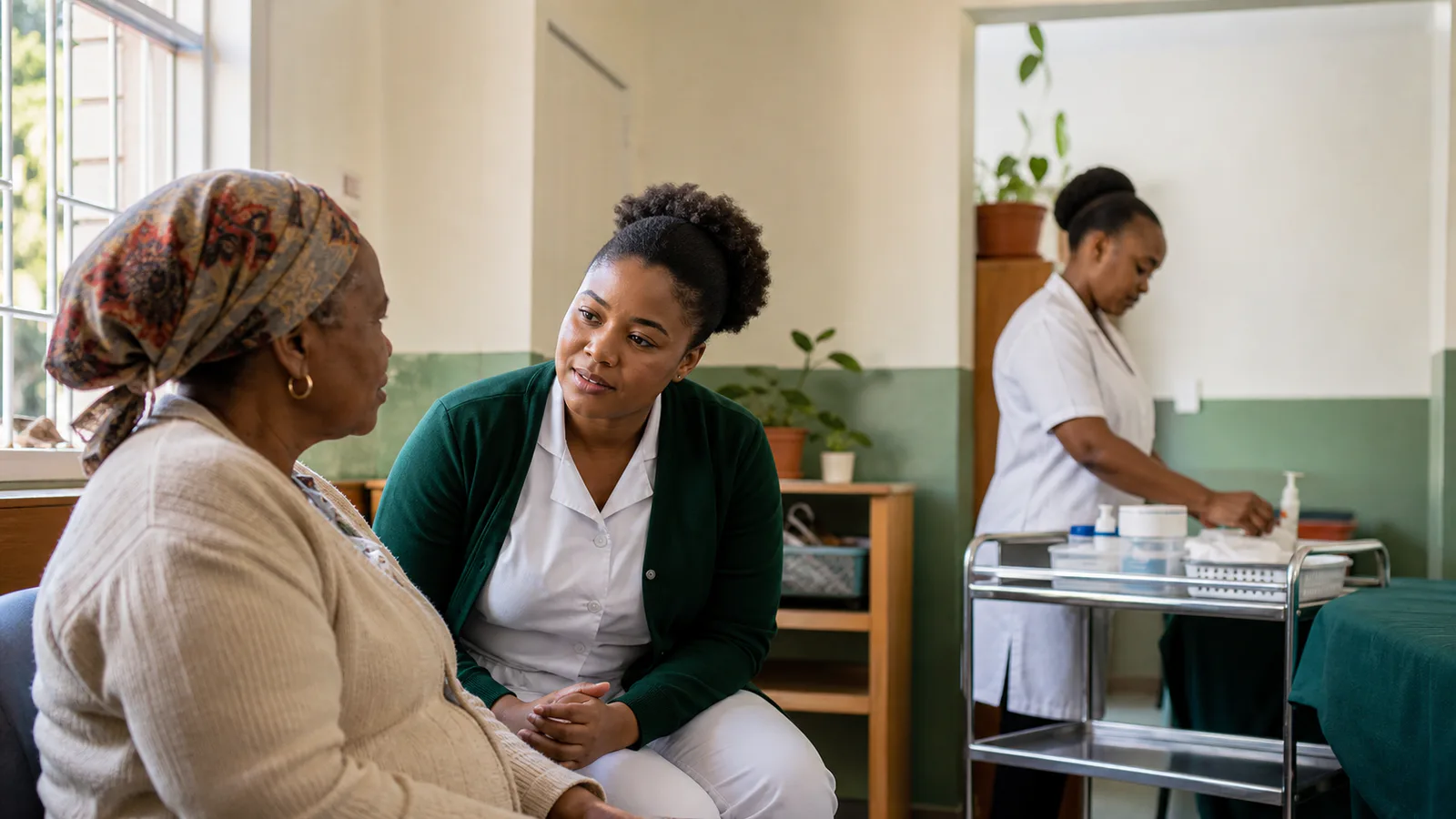
The care economy includes work that helps people remain healthy, safe and independent. Doctors and professional nurses are essential, but they are not the only people keeping care systems moving.
Community health workers connect people with services. Carers support daily living. Technicians help produce reliable clinical information. Administrators organise appointments and records. Cleaners, stock teams and maintenance workers support environments where safe care can happen.
These roles differ greatly in responsibility, training, regulation, pay and working conditions. Treating them as one simple healthcare career hides important choices.
Understand the main routes
Patient-facing support includes community health work, personal care and support for older people or people with disabilities. The work can involve close contact, patience, physical effort and emotionally difficult situations.
Clinical and professional routes include nursing, medicine, pharmacy and allied health professions. These usually require approved education, practical training, registration and a defined scope of practice.
Diagnostic and technical routes include occupations such as medical technicians, radiography and sonography. These roles combine technical accuracy with responsibility for patients and information.
Operational routes include scheduling, stock control, records, facilities and service coordination. They may not provide clinical care, but weak operations can still affect a patient's experience.
Do not assume that experience in one route authorises work in another. A short caregiving course does not make someone a nurse, and an administrator must not provide clinical advice.
Read the South African signal carefully
The 2024 National List of Occupations in High Demand includes multiple nursing occupations as well as Enrolled Nurse, Sonographer, Medical Technician, Community Health Worker, Aged or Disabled Carer and Personal Care Assistant.
The list gives different indicative minimum qualification levels. Some professional roles also have statutory education and registration requirements.
Even where the list states that no formal qualification is required for a particular occupation, an employer may still require verified training, screening, experience, language ability or other checks. No formal qualification does not mean no responsibility.
The list is also not a live vacancy count. A country can have a major need for care while employers or public services lack funded posts. The World Health Organization distinguishes workforce need from the system's ability to educate, employ, deploy and retain workers.
Check your fit with the real work
Before applying for training, ask yourself:
- Can I remain patient when a person is frightened, confused or frustrated?
- Am I comfortable with shift work, close personal contact or physical duties where the role requires them?
- Can I follow procedures even when the day is busy?
- Will I report an error instead of hiding it?
- Can I protect private health and identity information?
- Do I want direct care, technical work or operational support?
Compassion matters, but it is not enough on its own. Dependability, boundaries, accurate records and willingness to ask for help are also forms of care.
Run a 21-day reality check
In the first week, collect at least 15 recent Gauteng adverts across two care routes. Record the qualifications, registration, shifts, location and duties. Notice whether adverts use similar titles for different work.
In the second week, verify every training claim. For nursing, check whether the institution and programme are accredited by the South African Nursing Council. For another regulated profession, confirm the appropriate statutory body. For occupational training, verify the provider and qualification through the relevant official channels.
In the third week, speak to someone doing the work. Ask about a normal shift, emotional pressures, physical demands, supervision and the path from training to first employment.
Then calculate the complete route: fees, transport, materials, practical placements, registration costs and the time before you can lawfully work.
Be cautious if a provider rushes payment, avoids accreditation questions or guarantees a job.
Build appropriate evidence
Your evidence must match the route and stay within safe boundaries.
For operational support, create an appointment schedule, stock tracker or records-quality checklist using invented information. For community-facing work, develop a plain-language information sheet based on an official public-health source.
For regulated clinical or technical work, evidence should come from approved training and supervised practice. Do not stage clinical procedures, use patient information or claim competencies you have not been assessed to perform.
On your CV, describe care experience precisely. Supporting an older relative is different from professional employment. It may demonstrate patience and responsibility, but it should not be presented as a regulated qualification.
Choose sustainability as well as purpose
Care work can be meaningful and demanding at the same time. Ask about supervision, staffing, safety, emotional support, schedules and progression—not only the title.
Global and U.S. projections point to continued pressure on health and care work, but they cannot promise an opening in your area. Your strongest route combines verified training, realistic knowledge of the work and evidence that you can be trusted with people's wellbeing.
Sources and limits
- The DHET 2024 National List of Occupations in High Demand is a South African demand signal and qualification guide, not a vacancy or employment guarantee.
- The World Health Organization health-workforce overview describes global workforce needs and system constraints; need does not automatically equal funded jobs.
- The South African Nursing Council list of accredited education institutions explains accreditation requirements for nursing education.
- The U.S. BLS 2024–2034 projections overview provides U.S.-specific healthcare comparisons and is not a South African forecast.